Compression Stockings
For Dull, Tired and Achy Legs
Check if you qualify for no/low-cost compression stockings
The Right Compression Makes a Real Difference to Tired, Heavy Legs
Most of us never think about the work our legs do until they start to ache. By the end of a long day, the swelling, the heaviness, the dull throb behind the knee — these are not just signs of being tired. They are often signs that blood is struggling to make its way back up from the feet and ankles toward the heart.
Compression stockings are built to help with exactly that. They apply gentle, graduated pressure that is firmest at the ankle and eases as it moves up the leg, encouraging healthy circulation and giving the veins a hand with the job they are meant to do. For people managing diabetes, varicose veins, swelling, or the demands of pregnancy, the right pair can change how the legs feel from morning to night.
How It Works
Order online and get it delivered at your doorstep.

Step 1
Visit Our Website
Have a look at our website to know how our process works, what we offer, and all other essential details.

Step 2
Fill the Form
Share a few quick details so we can prepare for your visit. It only takes a moment, and it helps us come ready with the right options.

Step 3
Add Accurate Details
Be sure to add accurate details required in the form so we can match you with the right compression level and style.
Step 4
Receive Stockings at Home
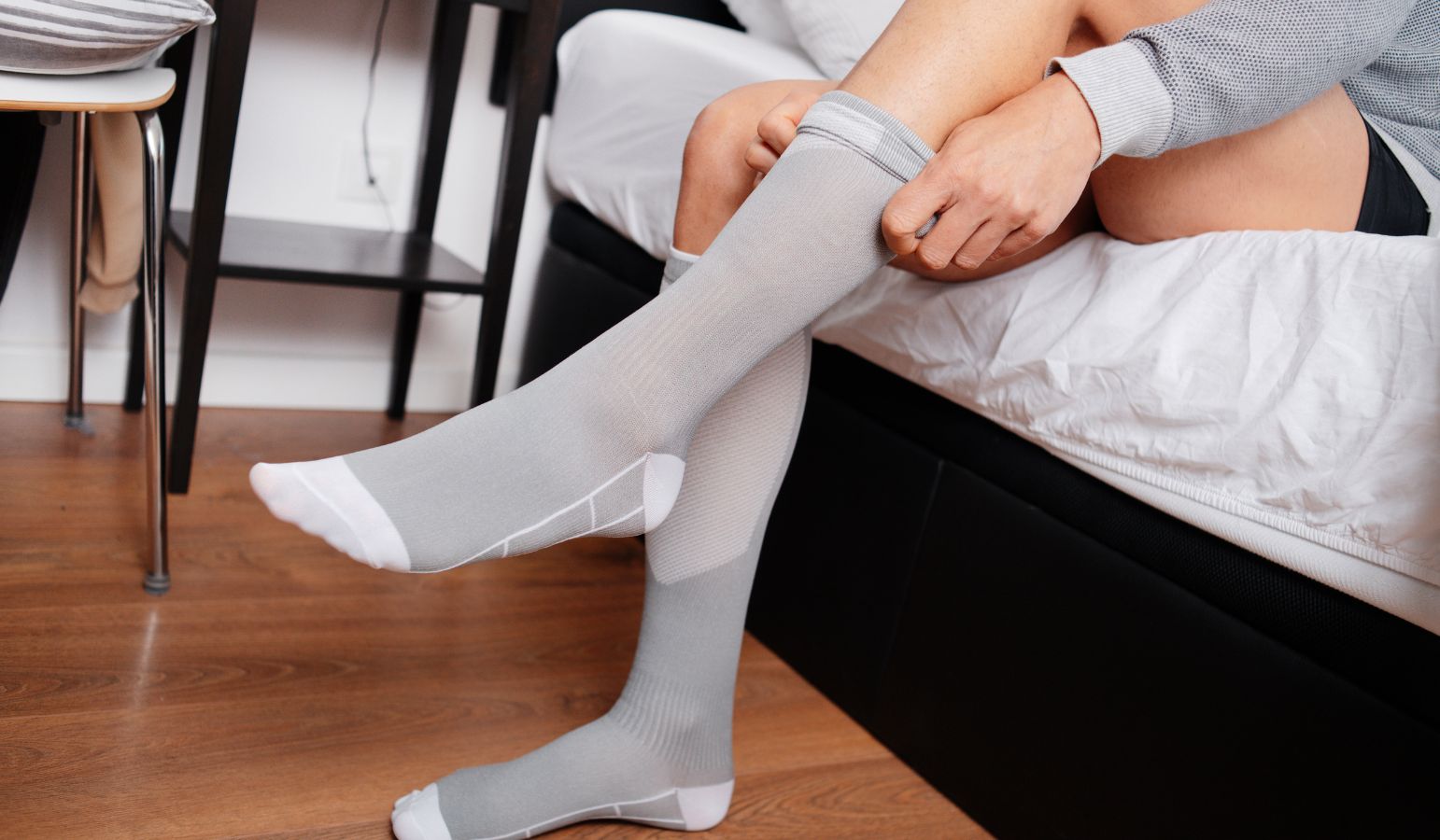
Your compression stockings are delivered, fitted properly, and explained clearly — including how to put them on with ease.
Who Can Benefit from Compression Stockings?
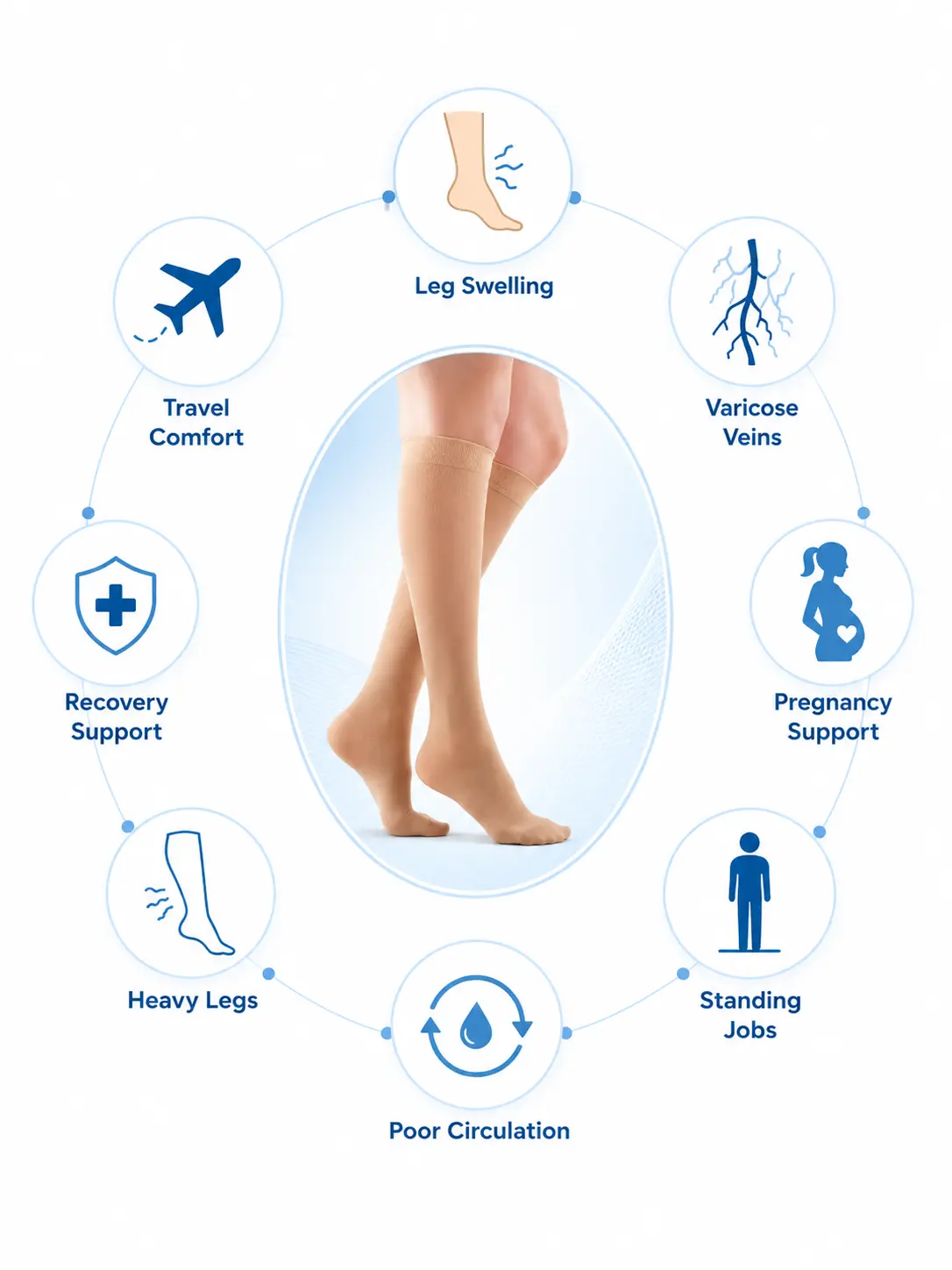
Compression stockings are not only for one type of patient. They help anyone whose legs are working harder than they should — whether the cause is a medical condition, a long day on your feet, or a temporary stage of life like pregnancy.
You may benefit from compression stockings if you:
✓ Notice your ankles or feet swelling, especially toward the end of the day
✓ Live with varicose veins or spider veins that ache, throb, or feel heavy
✓ Are pregnant and dealing with leg swelling, tired legs, or new vein changes
✓ Spend long hours standing or sitting still at work
✓ Have been diagnosed with diabetes, poor circulation, or venous insufficiency
✓ Feel heaviness or tightness in your legs that does not ease with rest
✓ Are recovering from surgery and have been advised to support circulation
✓ Travel for long stretches and want to reduce the risk of clots and swelling
Why Proper Compression Matters for Diabetic and At-Risk Legs
Compression and diabetes are closely connected — though the relationship deserves a careful explanation. Diabetes frequently brings the very problems compression is built to ease: swelling in the lower legs, sluggish circulation, and the fluid buildup that leaves feet and ankles puffy by evening. Worn correctly, the right compression can genuinely help, and for many people managing diabetes it becomes a valuable part of caring for their legs.
But diabetes also calls for caution that healthy legs do not. Reduced sensation from neuropathy can mean a stocking that is too tight goes unnoticed until it causes harm, and diabetes raises the risk of poor arterial circulation, where firm compression can do more damage than good. This is not a reason to avoid compression — it is the reason it should never be guessed at. A proper assessment, the right strength, and your physician’s input where needed are exactly what make compression safe and effective for diabetic legs. It is the careful approach we take with every patient we fit.
Encourages blood to flow upward
Graduated pressure supports the veins as they return blood from the feet toward the heart, where standing and sitting work against gravity all day.
Eases swelling and heaviness
By limiting the fluid that pools in the ankles and lower legs, compression helps reduce the puffiness and tired, aching feeling many patients describe.
Protects fragile skin
Less swelling means less stretched, vulnerable skin — which matters greatly for diabetic legs, where breakdown and slow healing are real concerns.
Supports varicose vein comfort
For visible, aching veins, the steady pressure can take the edge off the throbbing and help you stay on your feet more comfortably.
Helps through pregnancy
Maternity compression stockings ease the leg swelling and vein changes that are common in pregnancy, offering relief without medication.
Works alongside your footwear
Compression pairs naturally with diabetic shoes and orthotics, giving your feet and legs a complete, coordinated layer of support.
What You Should Know About Compression Stockings — A Deeper Look
There are many misconceptions about compression stockings but they offer multiple benefits, leaving your legs healthy and pain-free.
Compression Strength Is Not One Size Fits All
Compression is measured in millimeters of mercury, written as mmHg, and it comes in graded levels. Lighter, over-the-counter levels suit mild swelling and tired legs. Firmer, medical-grade levels are used for conditions such as varicose veins, venous insufficiency, and significant swelling.
Choosing the right level genuinely matters. Too light and you feel no benefit. Too firm without good reason — particularly with diabetes or arterial concerns — and the pressure can become a problem rather than a help. This is why we can assess each patient individually rather than handing everyone the same pair.
Choosing the Best Compression Stockings for Varicose Veins
When people ask about the best compression stockings for varicose veins, they are usually looking for relief from the aching, heaviness, and visible bulging that comes with weakened vein walls. The best pair is rarely about a brand name — it is about the right graduated strength, the right length for where your veins sit, and a fit that stays snug without digging in.
Graduated compression that is firmest at the ankle is generally the most useful approach for varicose veins, because it works with the direction your blood needs to travel. During your fitting, we look at where your veins are, how your legs respond through the day, and what you will realistically wear, then match you to a stocking that earns its place in your daily routine.
Maternity Compression Stockings During Pregnancy
Pregnancy changes how your legs feel for very normal reasons — more blood volume, more pressure on the veins in the pelvis, and hormonal shifts that relax the vein walls. The result is often swelling, heaviness, and sometimes the first appearance of varicose veins. Maternity compression stockings are designed to ease that without any medication, simply by supporting circulation through the day.
Many expectant mothers find the relief most welcome in the second and third trimesters and during long periods of standing or sitting. As with any choice during pregnancy, we encourage a quick word with your doctor or midwife about the right strength, and we are happy to fit you for a pair that stays comfortable as your body changes.
How Long Should You Wear Compression Socks?
The most common question we hear is how long should you wear compression socks each day. For most people, the simple answer is during your waking, active hours. Many patients put them on first thing in the morning — before swelling has had a chance to set in — and take them off in the evening before bed.
How long you wear them over the longer term depends on why you need them. Someone wearing compression for a long flight may only need them for a day, while someone managing chronic venous issues or diabetes may wear them daily for the long run. We will give you clear, practical guidance during your fitting, and we always suggest following any specific instructions from your treating physician.
Can You Sleep in Compression Stockings?
Patients often ask, can you sleep in compression stockings? For standard daytime graduated compression, the general answer is that they are designed to be worn while you are upright and moving — not overnight. When you lie down to sleep, your legs are level with your heart and gravity is no longer working against you, so the same pressure is usually not needed.
There are exceptions. Some patients are specifically prescribed lighter compression for nighttime use after surgery or for particular medical reasons. The safe rule is straightforward: do not sleep in your daytime stockings unless a medical professional has told you to. If overnight compression is something you have been advised to consider, talk to us and to your doctor, and we will help you understand the right approach.
Frequently Asked Questions
What are the best compression stockings for varicose veins?
The best compression stockings for varicose veins are the ones matched to your legs and your symptoms — not simply the most expensive pair on the shelf. What usually helps most is graduated compression that is firmest at the ankle, in a strength suited to how much aching and swelling you experience, and a length that covers where your veins actually sit.
Are maternity compression stockings safe during pregnancy?
Maternity compression stockings are widely used during pregnancy to ease leg swelling, heaviness, and the vein changes that are common as pregnancy progresses. Because they support circulation without any medication, many expectant mothers find them a welcome source of relief. As with anything during pregnancy, we recommend a quick conversation with your doctor or midwife about the right strength, and we are happy to fit you for a comfortable pair that adapts as your body changes.
How long should you wear compression socks each day?
For most people, compression socks are worn through their waking, active hours — put on in the morning before swelling builds and taken off in the evening before bed. How long you keep wearing them over time depends on the reason you need them: a single long flight is very different from managing an ongoing circulation condition. We give you clear, practical guidance at your fitting and always suggest following any specific instructions from your treating physician.
Can you sleep in compression stockings?
Standard daytime compression stockings are made to be worn while you are upright and moving, not overnight. When you lie down, your legs are level with your heart and the same pressure is usually not necessary. Some patients are prescribed lighter compression for nighttime use after surgery or for specific medical reasons, but as a rule you should not sleep in your daytime stockings unless a medical professional has advised it. If you are unsure, talk to us and to your doctor.
Do you come to me for the fitting?
Yes. Our certified fitter can come directly to you — your home, senior residence, or care facility — anywhere across New Orleans, Louisiana, Texas, Alabama, and Mississippi. There is no clinic visit and no travel required on your end.
Will my plan cover compression stockings?
Coverage depends on your plan and your diagnosis. If you are on Medicare or a qualifying plan, there is a chance your compression stockings are covered. We verify your coverage before your appointment. Call us and we will have a conversation about what your plan includes.
Ready to Give Your Legs the Support They Deserve?
Tired, heavy, swollen legs do not have to be something you simply put up with. The right compression — fitted properly — can change how every day feels.
Serving New Orleans, Louisiana, Texas, Alabama, and Mississippi. Accepted plans include