Your Feet Are Unique. Your Inserts Should Be Too.
When you walk into a pharmacy and pick up a pair of insoles off the shelf, you are getting something made for nobody in particular. It might offer a little cushioning. It might reduce some discomfort. But it was not made for the shape of your foot, the way your weight distributes, or the specific condition your feet are dealing with.
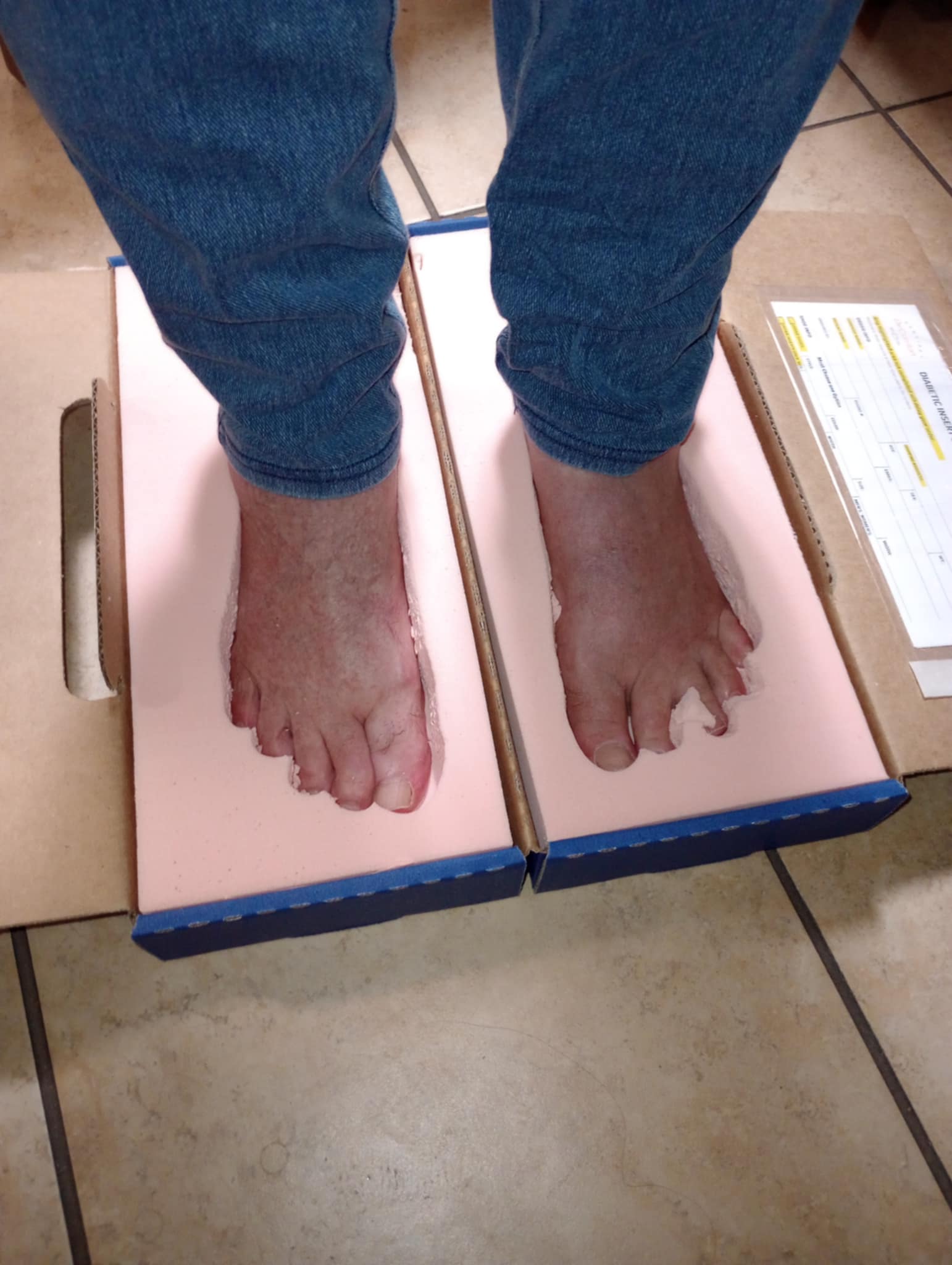
Custom orthotics are different. They are made from precise measurements of your feet — your arch height, your pressure points, the way you stand and move — and built to address your specific needs. For people living with diabetes, the difference is not just about comfort. It is about protection.
How It Works

Step 1
Call Us
We have a quick conversation about your needs and arrange a visit at a time that suits you.
Step 2
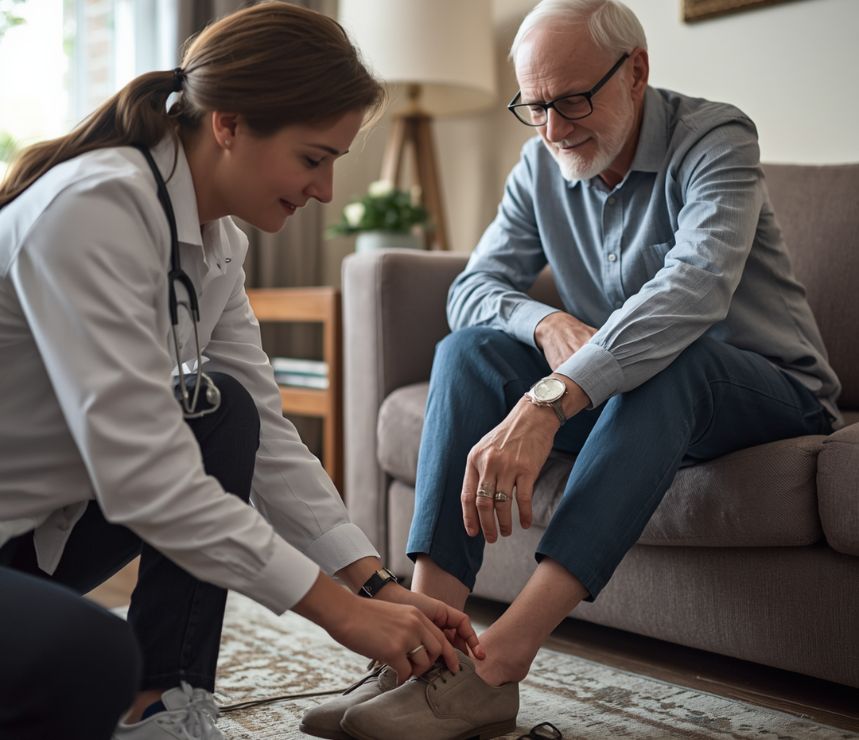
We Come to You
Our certified shoe fitter visits your home, senior center, or care facility. No travel required on your end.

Step 3
We Measure and Assess
We take precise measurements and assess your specific foot condition to determine the right orthotic solution for you.
Step 4
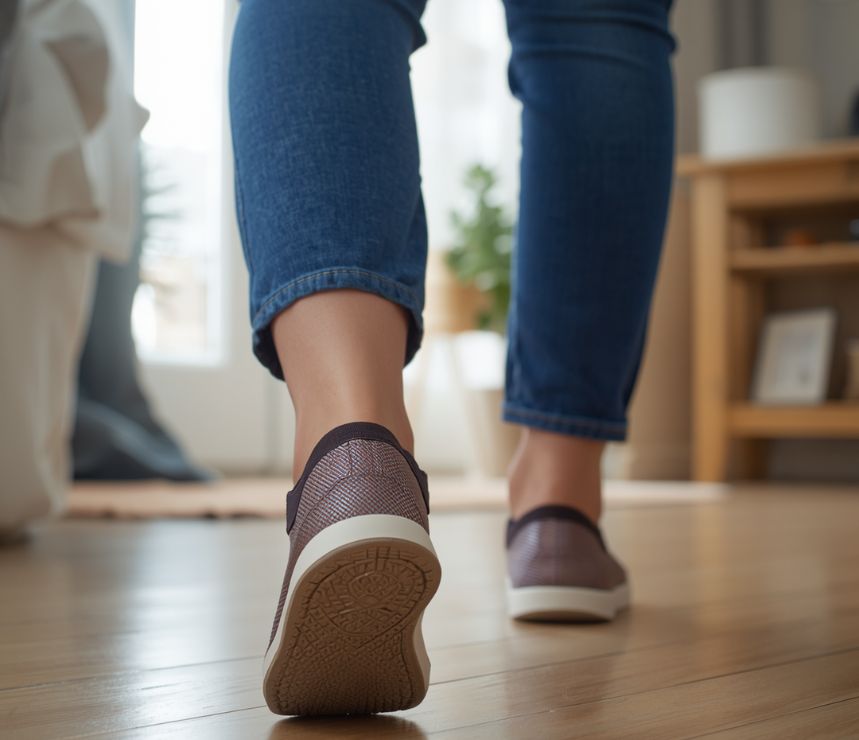
Your Orthotics Are Delivered
Your custom orthotics are delivered directly to you — ready to wear, explained clearly, and fitted properly.
Who Can Benefit from Custom Orthotics?
Custom orthotics are not exclusively for people with diabetes — though they offer particular value for diabetic foot health. The right orthotics can make a meaningful difference to anyone whose feet, ankles, knees, or lower back are being affected by the way they stand or move.
You may benefit from custom orthotics if you:
✔ Experience persistent foot or heel pain that does not improve with rest
✔ Feel discomfort while standing or walking for extended periods
✔ Have flat feet or high arches that cause instability, soreness, or uneven wear on your shoes
✔ Notice knee, hip, or lower back pain that may be connected to your gait or foot alignment
✔ Have been diagnosed with diabetic neuropathy, poor circulation, or have a history of foot ulcers
✔ Struggle to find shoes that fit comfortably because of foot shape changes or swelling
✔ Are recovering from a foot injury or surgery and need additional support during rehabilitation
✔ Spend long hours on your feet and want to reduce fatigue and strain over the course of the day
If any of these sound familiar, a conversation with our certified shoe fitter is a good place to start. There is no obligation — just honest, professional advice.
Why Custom Orthotics Matter for Diabetic Feet
Living with diabetes means your feet face challenges that most people never have to think about. The combination of reduced circulation and nerve damage creates a situation where small problems can quietly become serious ones. Custom orthotics address this reality in a way that no generic insole ever could.
Here is what properly fitted orthotics for diabetic feet actually do:
Redistribute pressure across the entire foot
Preventing dangerous hotspots from forming on the heel, ball, or toe areas where ulcers are most likely to develop.
Cushion areas of reduced sensation
Because when you cannot feel pain normally, your footwear needs to protect you from the outside in.
Support the foot's natural arch
Reducing the strain that misalignment places on joints, tendons, and soft tissue over time.
Reduce friction and shear forces
Two of the leading causes of skin breakdown and blistering in diabetic feet.
Accommodate swelling and foot shape changes
Which are common in people with diabetes and often make standard footwear ill-fitting and damaging.
Work alongside diabetic shoes
Our orthotics are fitted specifically to complement your diabetic footwear for maximum protection and all-day comfort.
What You Should Know About Custom Orthotics — A Deeper Look
There is a lot of misunderstanding around orthotics — what they are, how they work, and who they are actually for. This section addresses the things that matter most, particularly for patients managing diabetes or other chronic foot conditions.
The Difference Between Custom and Over-the-Counter
Over-the-counter insoles are mass-produced to a standard shape. They are designed to fit the average foot in the most general way possible. Custom orthotics begin with a detailed assessment of your individual feet — measurements, pressure mapping, and a review of your specific condition and daily activity level. The result is an insert that works with your anatomy rather than against it.
For someone without foot problems, an off-the-shelf insole may be adequate. For someone managing diabetes, neuropathy, or a structural foot issue, it simply is not enough.
How Long Do Custom Orthotics Last?
A well-made pair of custom orthotics, properly cared for, typically lasts between one and five years depending on activity level and the materials used. Orthotics fitted for diabetic feet are often reviewed more regularly because foot shape and condition can change over time. At Your Health & Comfort, we keep track of your history and can advise when a reassessment is appropriate.
What Happens If You Do Not Address Foot Problems?
This is something we feel strongly about being honest on. For people without diabetes, untreated foot mechanics issues can lead to chronic pain in the feet, knees, hips, and lower back. For people with diabetes, the stakes are higher. Pressure points that go unaddressed can develop into calluses, then open sores, then ulcers. In serious cases, untreated foot ulcers can lead to infection and, in the most severe situations, amputation.
This is not meant to cause alarm. It is meant to explain why proper footwear and properly fitted orthotics are not a luxury for diabetic patients — they are genuinely important.
Material Matters
Custom orthotics come in a range of materials depending on what your feet need. Rigid orthotics offer strong structural support and are suited to mechanical alignment issues. Semi-rigid orthotics provide a balance of support and cushioning — commonly used for diabetic feet where both protection and comfort are priorities. Soft orthotics are cushioning-focused and particularly beneficial for feet with reduced sensation or areas of significant pressure. Our certified shoe fitter will advise on the right material based on your specific situation.
The Role of Proper Fit
An orthotic that is not properly fitted — even a custom one — will not deliver its full benefit. Fit matters as much as the design. That is why our process always involves an in-person assessment rather than a mail-order measurement. A certified shoe fitter who can observe how you stand, how you move, and where your pressure points are will always produce a better outcome than any remote process can.
Frequently Asked Questions
What are custom orthotics?
Custom orthotics are inserts made specifically for your feet — built from precise measurements and a detailed assessment of your foot structure. Unlike generic insoles, they address your individual needs, whether that is correcting alignment, cushioning pressure points, or supporting a condition like diabetic neuropathy or plantar fasciitis.
Can I wear orthotics in any shoe?
In most cases, yes. Custom orthotics move between shoes as long as the shoe has a removable insole and enough depth to accommodate the insert comfortably. Your certified shoe fitter will advise on the best footwear to pair with yours during the fitting.
Who makes custom orthotics near me?
Your Health & Comfort does — and we come to you. Our certified shoe fitter handles the full assessment and fitting process on-site at your home, senior center, or care facility across New Orleans, Louisiana, Texas, Alabama, and Mississippi.
Where can I get custom orthotics near me?
If you are anywhere across New Orleans, Louisiana, Texas, Alabama, or Mississippi — we come directly to you. No clinic visit needed. Call us at (504) 205-4115 and we will arrange a visit at a time that works for you.
Ready to Get Started?
Properly fitted custom orthotics can make a real difference to how your feet feel every single day. Let us come to you.
Serving New Orleans, Louisiana, Texas, Alabama, and Mississippi. Accepted insurance plans